How Thick Should Loft Insulation Be? UK Guide to 270mm & Energy Savings

Understanding how thick should loft insulation be is essential for UK homeowners who want to save on energy bills and make their homes more comfortable year-round. Proper loft insulation prevents heat loss through the roof, which is one of the main ways houses lose energy. Knowing the right thickness ensures maximum efficiency, reduces carbon emissions, and protects your home from damp and condensation.


Many homeowners are unsure how thick should loft insulation be to meet building regulations while also providing long-term savings. Installing insulation that is too thin wastes energy, while over-insulating can restrict airflow and cause problems like mould. By following current UK guidelines, homeowners can achieve the ideal balance of comfort, cost efficiency, and compliance.
What is Loft Insulation?
Loft insulation is a material installed between or across roof joists to reduce heat loss through the ceiling. Common materials in the UK include mineral wool, glass wool, natural fibres like sheep’s wool, and rigid foam boards. Each material offers different levels of thermal efficiency, fire resistance, and ease of installation, but all aim to improve energy retention in homes.
Understanding how thick should loft insulation be is vital because the performance of the material depends on proper depth and installation. Loft insulation not only keeps your home warmer during winter but also helps maintain cooler indoor temperatures in summer. It is an investment that pays off in energy savings, comfort, and long-term protection of the property.
Recommended Loft Insulation Thickness in the UK
Current UK building regulations recommend a minimum loft insulation thickness of 270mm for mineral wool or glass wool insulation. This typically involves laying a first layer between the joists, followed by a second layer across the joists to achieve the total recommended depth. Properly installed insulation at this thickness maximises energy efficiency and complies with legal standards.
Over the years, the recommended depth has evolved. For example, in 2014 and 2016, slightly thinner insulation was common, while 2017, 2023, and 2024 emphasise 270mm as the standard for domestic properties. Homeowners who want to know how thick should loft insulation be can refer to these guidelines to ensure compliance and avoid unnecessary energy loss.
Factors Affecting Loft Insulation Thickness
Several factors influence how thick should loft insulation be, including the type of property, roof structure, and the material used. Detached houses often need slightly more insulation due to larger roof spaces, while flats or smaller properties may require less. The type of insulation also affects the depth needed to reach optimal thermal performance.
Existing insulation should be measured carefully before adding new layers. Homeowners must consider ventilation and airflow to prevent condensation and damp issues. Storage in the loft may also affect installation, as elevated boards might be required to avoid compressing the insulation. Knowing these factors ensures the correct thickness is installed for maximum efficiency and safety.
How to Measure and Install Loft Insulation
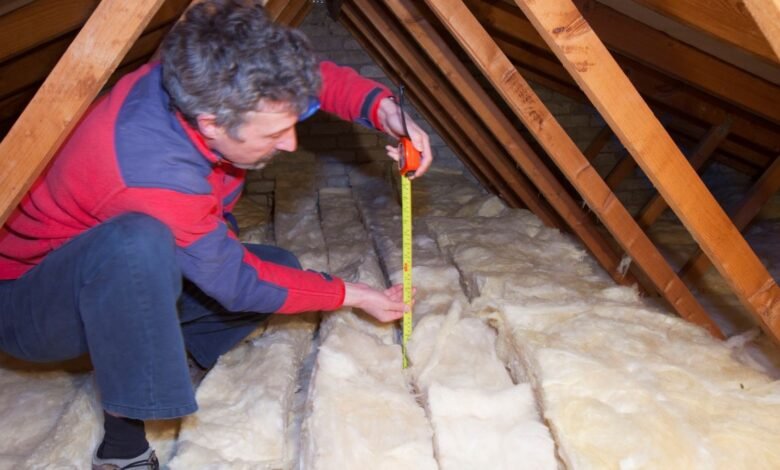
Measuring existing insulation involves using a ruler or tape measure from the loft floor to the top of the current insulation. This measurement helps determine how much additional insulation is required. Understanding how thick should loft insulation be allows homeowners to decide if a simple top-up or a complete replacement is necessary.
Installing loft insulation requires care to achieve the recommended depth of 270mm. The first layer should be laid between the joists, and the second layer across the joists. Avoid compressing the insulation, as this reduces efficiency. Homeowners should wear protective gear, follow safety guidance, and consider professional help if unsure. Correct installation ensures both compliance and long-term savings.
Loft Insulation and UK Regulations
UK regulations stipulate that loft insulation in domestic properties should reach a minimum of 270mm. Compliance ensures homes meet energy efficiency standards, which helps reduce heating bills and carbon emissions. Following these guidelines also allows homeowners to qualify for certain grants or energy-saving incentives.
Knowing how thick should loft insulation be is essential for avoiding non-compliance, which could affect property value or safety. Homeowners should also maintain proper ventilation and follow fire safety recommendations when installing insulation. Regular inspections ensure that insulation continues to perform effectively and that energy savings remain consistent over time.
Benefits of the Right Loft Insulation Thickness
Installing loft insulation to the correct thickness offers multiple benefits. Energy bills are reduced as heat retention improves, creating a warmer, more comfortable home. Proper insulation also contributes to environmental sustainability by lowering carbon emissions and reducing reliance on heating systems.
The ideal thickness of 270mm ensures long-term durability, requiring minimal maintenance over decades. Knowing how thick should loft insulation be prevents problems such as underperformance or over-insulation, which can restrict airflow and cause condensation. This balance protects the property while maximising comfort and savings.
Conclusion
Understanding how thick should loft insulation be is crucial for homeowners who want a comfortable, energy-efficient home. The recommended 270mm depth ensures compliance with UK building regulations, reduces heating costs, and protects against damp or mould. Regular inspections and proper installation guarantee long-term benefits, making loft insulation one of the smartest investments for any household.